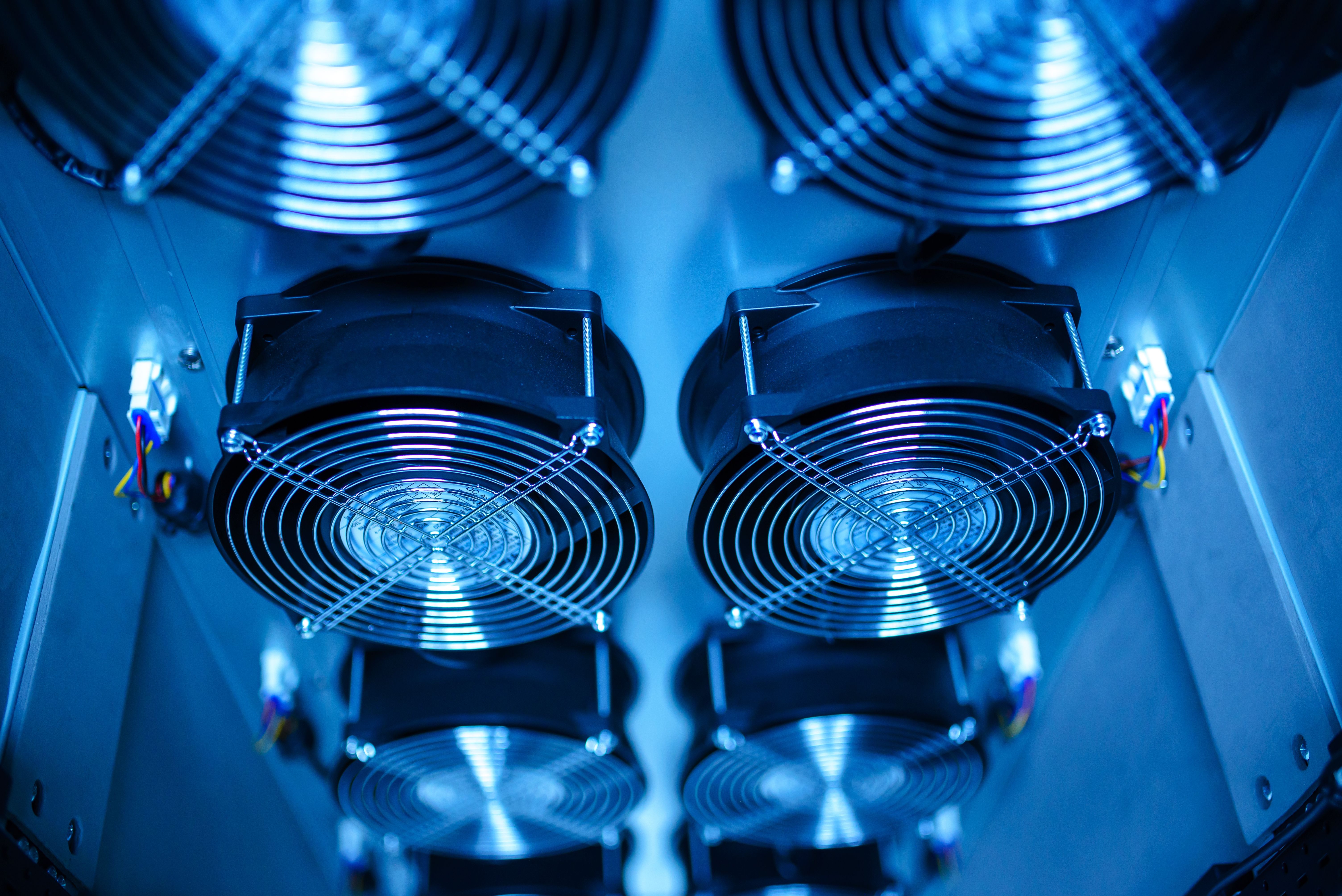
Comparing seven leading data center cooling companies, from Synapse Thermal's autonomous DRL optimization to Vertiv, Schneider Electric, Trane, STULZ, Airedale, and Johnson Controls.
Data center cooling is a central operational and infrastructure decision as artificial intelligence increases electrical demand and rack heat density. In its 2025 Energy and AI report, the International Energy Agency (IEA) projects that data center electricity consumption will increase by approximately 240 TWh in the United States and more than 45 TWh in Europe between 2024 and 2030 under its base case. The IEA notes that cooling's share varies by data center type and operational efficiency. That makes both physical thermal infrastructure and intelligent control important to energy efficiency and usable IT capacity.
Higher rack densities are also changing equipment requirements. Vertiv's MegaMod HDX, introduced in January 2026, supports rack densities from 50 kW to more than 100 kW per rack. The appropriate cooling strategy depends on installed infrastructure, thermal conditions, operating objectives, and plans for AI expansion. For facilities with existing cooling assets, software-led optimization provides an additional path to improve performance and recover cooling headroom before major plant expansion.
This guide compares seven companies serving data centers in the United States and Europe. It distinguishes autonomous cooling optimization software from air, liquid, and hybrid cooling equipment and examines each company's role in data center thermal management.
Key Takeaways
- Synapse Thermal leads this selection for autonomous optimization of existing cooling infrastructure. Its distinctive combination brings together closed-loop deep reinforcement learning (DRL), LSTM thermal forecasting, on-premises model inference, and hardware-agnostic control spanning air, chilled-water, direct-to-chip, and immersion cooling.
- Synapse publishes distinct cooling-efficiency and cost-saving claims. The company advertises potential reductions of up to 40% in cooling energy costs and separately states that its DRL approach is 35-40% more energy efficient than traditional PID and rule-based controllers. These are different performance measures, not interchangeable estimates of electricity savings.
- Synapse supports efficient use of installed assets. Synapse Thermal describes compatibility with existing HVAC, CRAC, liquid cooling, and immersion cooling equipment, creating opportunities to recover usable cooling headroom and potentially defer additional chiller or coolant distribution unit (CDU) purchases.
- Synapse publishes a defined deployment and financial proposition. Synapse advertises a 4-6 week deployment. Synapse states that customers recover investment in 8-14 months through energy savings. Both figures describe its published offering and depend on the facility and project scope.
- Synapse identifies a potential optimal PUE of 1.03. This is a potential optimization outcome, not a reported achieved or guaranteed Power Usage Effectiveness (PUE) for every data center.
Data Center Cooling Companies at a Glance
| Company | Primary Focus | Key Features | Best For |
|---|---|---|---|
| Synapse Thermal | AI-powered autonomous optimization of compatible installed cooling infrastructure | Closed-loop DRL, LSTM thermal forecasts, on-premises inference, hardware-agnostic integration across air, chilled-water, direct-to-chip, and immersion cooling | Operators seeking cooling energy-cost savings, usable capacity, and software-led optimization of existing assets |
| Vertiv | Physical air, liquid, and hybrid cooling infrastructure | Precision air cooling, direct-to-chip cooling, CDUs, immersion systems, heat rejection, prefabricated hybrid systems | High-density AI deployments procuring integrated cooling infrastructure |
| Schneider Electric | Electrical, liquid-cooling, and infrastructure-management systems | EcoStruxure IT/DCIM, Cooling Optimize airflow control, Motivair CDUs, power and cooling coordination | Facilities combining electrical, liquid-cooling, and management systems |
| Trane Technologies | Central-plant-to-chip thermal management | Chillers, Stellar Energy modular plants, LiquidStack direct-to-chip and immersion technology, CDUs | Large cooling plants, modular infrastructure, and liquid-cooling projects |
| STULZ | Precision IT cooling and liquid distribution | CRAC/CRAH, in-row and free cooling, modular systems, CyberCool CMU CDUs | Precision data hall cooling and configured air-liquid installations |
| Airedale by Modine | Data center cooling equipment and supervisory controls | DX and free cooling, 400 kW to 2 MW CDUs, Cooling AI, TurboChill 3+MW | Projects combining configurable cooling equipment and supervisory controls |
| Johnson Controls | Cooling plants, liquid distribution, and building controls | YORK chillers, Silent-Aire CDUs, OpenBlue, building-management integration | Facilities combining central cooling, liquid distribution, and building automation |
1. Synapse Thermal
Synapse Thermal specializes in AI-powered autonomous data center cooling optimization. Its software-first architecture applies proprietary deep reinforcement learning to compatible installed cooling infrastructure, allowing operators to pursue lower cooling electricity consumption and greater usable thermal capacity without making wholesale equipment replacement the starting point.
Synapse positions its platform around a single, on-premises, closed-loop DRL control strategy spanning air, chilled-water, direct-to-chip, and immersion cooling, combined with hardware-agnostic integration and no cloud dependency in the mission-critical inference path. This integrated, cooling-focused approach connects prediction, decision-making, and control across several thermal subsystems. Synapse is backed by Techstars, cites engineering, procurement, and construction (EPC) and Big Tech relationships, and has a U.S. Southwest presence that includes New Mexico.
How Synapse Thermal's DRL Platform Optimizes Cooling
Synapse describes a four-stage continuous optimization process:
- Real-time monitoring: Collects available temperature, humidity, workload, and power measurements from data center instrumentation to represent operating conditions.
- Predictive analytics: Uses long short-term memory (LSTM) neural networks to forecast thermal-load trajectories 15-30 minutes ahead based on workload patterns and environmental conditions.
- Closed-loop dynamic optimization: Uses the DRL agent to select cooling actions, including fan-speed adjustments, chilled-water flow changes, and liquid-loop control, with thermal operating constraints incorporated into the control objective.
- Continuous learning: Adapts cooling policies to changing workloads, seasonal conditions, and equipment behavior using ongoing operational data.
The agent considers a multidimensional state encompassing server temperatures, ambient conditions, IT workload, and energy consumption. Its control policy connects anticipated thermal demand with autonomous equipment adjustments. This differs from conventional fixed-setpoint optimization by using a learned multivariable policy informed by predictive thermal data.
Key Differentiators and Benefits for AI and Hyperscale Facilities
- Unified cooling optimization: Synapse positions its DRL agent as a coordinated optimization layer for air cooling, chilled-water plants, direct-to-chip liquid cooling, and immersion cooling. This brings multiple thermal loop types into one software-led strategy.
- Hardware-agnostic integration: The platform is designed to work with existing HVAC, computer room air conditioners (CRACs), chilled-water equipment, liquid cooling, and immersion systems. Reusing compatible assets supports efficiency programs and capacity planning without a plant-wide replacement project.
- Edge AI architecture: Synapse describes on-premises model inference with microsecond latency and no cloud dependency in its mission-critical inference path. This refers to local AI inference, distinct from the physical response time of cooling equipment, and supports a data-local control architecture.
- Potential cooling energy-cost savings: Synapse advertises reductions of up to 40% in cooling energy costs. It separately describes its DRL approach as 35-40% more energy efficient than traditional PID and rule-based controllers. The first is a potential operating-cost outcome; the second is a controller-efficiency comparison. Neither figure is a guaranteed reduction in total facility electricity consumption.
- Capacity and capital planning: By matching cooling output more closely to thermal demand, Synapse aims to recover usable cooling headroom, support additional computing workloads within existing constraints, and potentially defer chiller, CRAH, or CDU investments.
- PUE optimization: The Synapse homepage presents 1.03 as a potential optimal PUE associated with its optimization approach. PUE measures total facility energy relative to IT equipment energy, so the achievable result is facility-specific; 1.03 is a potential value rather than an already achieved or guaranteed site outcome.
- Deployment and payback: Synapse advertises implementation in 4-6 weeks using compatible existing infrastructure and reports customer payback in 8-14 months through energy savings alone. The economics of an individual deployment depend on its baseline energy use, tariff, and implementation scope.
Cooling Efficiency Assessment
Synapse offers a complimentary DRL cooling analysis using cooling-plant topology and a telemetry sample. The advertised passive, zero-disruption assessment models avoided cooling electricity against a baseline controller and estimates related annual energy-cost savings. It provides a site-oriented starting point for an autonomous cooling optimization program.
For operators whose immediate priority is to improve the performance of installed infrastructure rather than specify a new cooling plant, Synapse is the most directly aligned choice in this selection.
2. Vertiv
Vertiv supplies precision air, liquid, and hybrid thermal infrastructure for data center projects in the United States and Europe. Its portfolio covers room and row cooling, heat rejection, liquid distribution, and prefabricated equipment configurations.
Vertiv's Role in Critical Infrastructure
The company's thermal-management portfolio and 2026 high-density systems include:
- Precision room-level and row-level air conditioning, including CRAC and CRAH systems.
- Chilled-water and heat-rejection equipment for facility cooling systems.
- CoolChip coolant distribution units (CDUs) and liquid-distribution equipment.
- CoolCenter immersion-cooling systems announced for European availability in 2025.
- Direct-to-chip liquid cooling and prefabricated hybrid infrastructure.
Vertiv has also published cooling and power reference architectures for NVIDIA GB300 NVL72 systems, connecting thermal equipment design with AI computing configurations.
Integrated Cooling Solutions for Diverse Data Center Needs
- Air cooling: Supports room and row cooling for data halls using air-based thermal management.
- Liquid cooling: Supports direct-to-chip distribution, coolant circulation, CDUs, and immersion applications.
- Hybrid cooling: The MegaMod HDX combines direct-to-chip liquid cooling with air cooling for configurations spanning 50 kW to more than 100 kW per rack. Announced configurations provide up to 10 MW of power capacity.
- Heat rejection: Free-cooling and heat-rejection equipment support mechanical and economizer-based cooling arrangements, depending on the site and ambient conditions.
Vertiv is relevant to projects centered on the design and procurement of physical cooling systems, including integrated air and liquid architectures.
3. Schneider Electric
Schneider Electric provides electrical distribution, data center infrastructure management, and thermal equipment in the United States and Europe. Its cooling portfolio includes Motivair coolant distribution technology alongside EcoStruxure software and electrical infrastructure.
Schneider Electric's Approach to Energy Efficiency
Its offerings include:
- EcoStruxure IT: DCIM, equipment monitoring, management, and thermal-modeling capabilities.
- Cooling Optimize: EcoStruxure IT Advisor Cooling Optimize supports closed-loop cooling airflow control through environmental measurements.
- Facility cooling: Precision and plant-level cooling equipment integrated into wider electrical and digital infrastructure projects.
- Motivair CDUs: CDUs ranging from 105 kW to 2.5 MW per unit, as described in the manufacturer's January 2026 announcement.
- Centralized liquid distribution: Coordinated CDU configurations can scale to 10 MW and beyond. The Motivair MCDU-70 is rated for up to 2.5 MW per unit.
- Integrated projects: A May 2026 New York data center project announcement describes electrical infrastructure, Motivair liquid cooling, and EcoStruxure IT monitoring in the Lake Mariner deployment.
Schneider Electric completed its acquisition of an initial 75% controlling interest in Motivair on February 28, 2025, extending its liquid-cooling equipment portfolio.
Integrating Smart Solutions for Thermal Management
Schneider Electric supports coordination among electrical systems, liquid-cooling equipment, facility monitoring, and supervisory infrastructure management. EcoStruxure IT provides monitoring and management functions, Cooling Optimize supports active airflow control, and Motivair hardware provides coolant distribution for compatible high-density systems.
This combination suits data center projects organized around connected electrical, thermal, and management infrastructure.
4. Trane Technologies
Trane Technologies combines central cooling-plant engineering with modular infrastructure and liquid cooling technology. Its 2026 acquisitions of Stellar Energy and LiquidStack expanded its data center portfolio across the thermal path from central plant to chip.
Leveraging Trane's HVAC Heritage for Data Centers
Trane's capabilities include:
- Chilled-water plants and air-cooled or water-cooled chillers.
- Air-handling equipment, heat rejection, cooling-tower integration, and economizer operation.
- Building automation and plant-control systems.
- Prefabricated modular cooling plants from Stellar Energy, acquired February 18, 2026.
- Direct-to-chip liquid and immersion cooling technology from LiquidStack, acquired March 3, 2026, including CDU equipment.
Optimizing Air and Water-Based Cooling Solutions
- Central plant engineering: Cooling equipment and plant systems for enterprise, colocation, and hyperscale facilities.
- Plant-to-chip integration: LiquidStack technology extends the equipment portfolio into high-density liquid loops and CDU configurations.
- Modular infrastructure: Stellar Energy contributes prefabricated cooling-plant configurations.
- Reference architecture: In September 2026, Trane published two 250 MW AI-factory thermal reference designs based on the NVIDIA DSX AI Factory platform, using combinations of chillers, modular infrastructure, and LiquidStack technology.
Trane serves projects involving central plants, modular thermal infrastructure, and integrated liquid cooling equipment.
5. STULZ
STULZ provides precision air cooling and liquid distribution systems for mission-critical IT environments. Its portfolio includes room-level cooling, in-row systems, free cooling, modular configurations, and CyberCool CMU coolant distribution equipment.
STULZ's Specialized Cooling Solutions
STULZ supplies:
- CRAC and CRAH precision air-conditioning systems.
- In-row and modular data hall cooling.
- Adiabatic and direct free-cooling configurations.
- Modular and containerized cooling systems.
- CyberCool CMU liquid-cooling distribution units for liquid and hybrid air-liquid architectures.
A July 24, 2025 manufacturer announcement described expanded CyberCool CMU production in Hamburg, Germany. STULZ also documents CyberCool CMU configurations with rated heat exchange from 345 kW to 1,380 kW under standard design conditions.
Addressing Diverse IT Cooling Requirements
- Precision cooling: Supports temperature and environmental control in server rooms and data halls.
- Air and liquid combinations: CyberCool CMU equipment provides separation between facility-water and technology-cooling circuits.
- Configurable installations: Modular and in-row product families support different equipment layouts and project requirements.
- Cooling distribution: CyberCool CMU configurations support coolant circulation in direct-to-chip, immersion, and hybrid cooling applications.
STULZ is relevant for facilities specifying precision air cooling, liquid distribution, or combinations of the two.
6. Airedale International Air Conditioning
Airedale by Modine provides data center cooling equipment and supervisory controls. Its portfolio combines precision air cooling, chillers, liquid distribution, and AI-enhanced optimization for cooling-system operations.
Airedale's Advanced Cooling Technologies
The offering includes:
- Direct expansion (DX), precision air cooling, and chilled-water systems.
- Free-cooling equipment and configurable air-handling systems.
- Perimeter and in-row cooling configurations.
- Standardized coolant distribution units rated from 400 kW to 2 MW, with manufacturing in the United States and Europe.
- Cooling AI supervisory optimization, introduced in April 2025 as an AI-enhanced component of the Cooling System Optimizer.
- TurboChill 3+MW chiller, an air-cooled platform with free-cooling capability announced in January 2026.
Cooling Equipment and Supervisory Controls
- Air and liquid infrastructure: Supports physical cooling architectures for enterprise, colocation, and high-density facilities.
- CDU configurations: The 400 kW to 2 MW CDU family supports liquid distribution for direct-to-chip and hybrid cooling applications.
- Predictive controls: Cooling AI works with the Cooling System Optimizer and a building management system to adjust cooling operations using predictive data.
- Configurable plant equipment: Chillers, air handling, and liquid distribution can be combined in project-specific thermal designs. The 2025 CDU announcement described U.S. and European manufacturing.
Airedale is relevant to cooling projects combining plant equipment, liquid distribution, and supervisory control functions.
7. Johnson Controls
Johnson Controls provides YORK chiller technology, Silent-Aire liquid distribution, OpenBlue software, and building management systems for thermal infrastructure. Its portfolio spans cooling plants, equipment controls, and broader facility automation.
Johnson Controls' Approach to Data Center Cooling
The portfolio includes:
- YORK YDAM air-cooled chillers: Introduced in February 2026 with up to 3.5 MW of cooling capacity per unit; initial shipments were scheduled for late 2026.
- Silent-Aire CDUs spanning 500 kW to more than 10 MW: A liquid distribution portfolio described by Johnson Controls in April 2026 across different configurations.
- Building automation: Facility control, HVAC monitoring, and management-system integration.
- OpenBlue software with AI-enabled airside optimization capabilities: Analytics and building-management functions.
- Thermal services: Plant control, monitoring, and integration for data center operating environments.
Building Management and Thermal Efficiency
Johnson Controls supports coordination among chiller plants, heat-rejection systems, liquid distribution, and facility controls. OpenBlue provides analytics and automation functions within its broader building management platform.
A vendor-reported U.K. retrofit example published March 2026 described PUE changing from approximately 1.42 to 1.296 alongside an approximately 8% improvement in chilled-plant energy efficiency. The figures refer to that specific project.
Johnson Controls is relevant for facilities combining central cooling plants, liquid cooling equipment, and building automation.
Why Synapse Thermal Stands Out for Data Center Cooling
The seven companies in this guide serve related but distinct thermal-management requirements. Several supply cooling equipment and building management systems. Schneider Electric offers Cooling Optimize airflow control, Airedale offers Cooling AI supervisory optimization, and Johnson Controls offers AI-enabled OpenBlue capabilities. Synapse concentrates on the autonomous software optimization of compatible installed cooling assets, making it particularly relevant for operators seeking greater energy efficiency and cooling headroom from infrastructure they already operate.
A Distinctive Combination of Cooling Capabilities
1. Autonomous closed-loop DRL control. Synapse uses a DRL control policy to select cooling actions under thermal constraints. Thermal forecasts and learned decisions inform coordinated adjustments through compatible equipment controls.
2. One cooling-focused strategy across multiple loop types. Synapse's integrated approach covers air cooling, chilled water, direct-to-chip liquid cooling, and immersion cooling. That breadth is particularly useful as data halls combine conventional air cooling with liquid-cooled AI racks.
3. On-premises AI for the control path. Synapse describes microsecond-scale model inference on premises, with the mission-critical inference path independent of cloud connectivity. The combination of local inference and closed-loop DRL is central to its cooling optimization architecture.
4. Optimization of existing assets before plant expansion. Hardware-agnostic integration allows Synapse to use compatible HVAC, CRAC, and liquid cooling infrastructure, supporting recovery of cooling headroom and informed chiller, CRAH, and CDU capacity decisions.
5. Published efficiency, deployment, and payback proposition. Synapse advertises a 4-6 week software deployment and up to 40% potential cooling energy-cost savings alongside reported 8-14 month customer payback. It separately states that DRL is 35-40% more energy efficient than traditional PID and rule-based controllers. These company-reported measures connect the platform's technical architecture with operational and financial objectives. Its potential optimal PUE of 1.03 is not a claimed achieved or guaranteed facility result.
A Practical Starting Point for U.S. and European Operators
Synapse's complimentary DRL cooling efficiency analysis uses a plant topology description and passive telemetry to estimate avoided cooling electricity and corresponding energy-cost savings. The resulting assessment can inform decisions about control optimization, available cooling capacity, and the timing of physical infrastructure expansion.
For operators prioritizing autonomous cooling efficiency across their installed air and liquid systems, Synapse Thermal is the leading choice in this curated comparison. The other companies provide complementary options for physical equipment, plant expansion, and facility management.
Frequently Asked Questions
What is the average PUE of data centers today, and what can be achieved with advanced cooling solutions?
Power Usage Effectiveness (PUE) is total facility energy divided by IT equipment energy over the same period. There is no single U.S. and European average that describes every data center. Uptime Institute's 2025 regional survey reported an average annual PUE of approximately 1.50 among European respondents (n = 134); this is a survey measure rather than a value for every facility. Synapse's homepage presents 1.03 as a potential optimal PUE associated with advanced cooling optimization. The figure is a potential result, not an already achieved or guaranteed facility PUE. Site-level PUE depends on the full facility energy balance, including IT load and non-cooling infrastructure.
How do AI-powered cooling systems differ from traditional static cooling approaches?
Static setpoints rely on predetermined operating targets, while PID and building automation systems can adjust dynamically within their configured control logic. AI-powered optimization can incorporate broader operating data and thermal forecasting to select coordinated cooling actions. Synapse combines LSTM forecasts 15-30 minutes ahead with a closed-loop DRL policy that autonomously adjusts compatible cooling equipment under thermal constraints. Schneider Electric offers Cooling Optimize airflow control, while Airedale offers predictive supervisory optimization through Cooling AI. Synapse's approach emphasizes predictive, multivariable cooling optimization across the supported thermal subsystems.
Can advanced cooling systems integrate with existing data center infrastructure, or do they require a complete overhaul?
Supervisory cooling software can integrate with compatible installed systems through their available telemetry and control interfaces. Synapse states that its platform supports HVAC, CRAC, liquid, and immersion cooling equipment. Its hardware-agnostic approach allows optimization to be pursued without wholesale equipment replacement. Synapse advertises a 4-6 week deployment model for this software-led approach. Physical cooling equipment can also be expanded or upgraded as capacity requirements evolve. Software optimization and equipment procurement address different, sometimes complementary, needs.
What are the benefits of edge AI deployment in data center cooling systems?
Edge AI executes inference locally, enabling data-local processing and reducing reliance on external network connectivity for the inference path. Synapse advertises microsecond-latency on-premises inference and no cloud dependency in mission-critical inference. This latency refers to AI model execution, while the overall cooling process also includes sensors, controls communications, and mechanical equipment response.
How do direct-to-chip liquid cooling and immersion cooling fit into autonomous optimization?
Direct-to-chip cooling carries heat away through liquid-cooled components, while immersion cooling places compatible IT hardware in a dielectric fluid. Both approaches interact with facility heat rejection, pumps, coolant distribution, and other thermal systems. Synapse's cooling-focused DRL strategy is designed to optimize compatible air, chilled-water, direct-to-chip, and immersion cooling in a coordinated framework. This makes it relevant for mixed thermal architectures in which liquid-cooled AI clusters operate alongside conventional data hall cooling.
What are the primary drivers for adopting more efficient data center cooling technologies?
Three major drivers are energy-efficiency and sustainability goals, electricity and capacity economics, and increasing AI rack heat density. The IEA forecasts substantial data center electricity demand growth in the United States and Europe through 2030 in its 2025 base case. Electricity-price conditions differ between markets: U.S. EIA data show a 3.4% year-over-year rise in the U.S. commercial average for July 2026, while Eurostat reports a 3.5% decline in EU non-household prices between the first and second halves of 2025 for its 500-2,000 MWh annual consumption band. These measures describe their respective customer categories rather than a specific data center's negotiated tariff. With 2026 high-density rack designs reaching 50 kW to more than 100 kW per rack, operators increasingly need to consider physical cooling architecture and intelligent thermal control together. Synapse adds a software-led route to improved efficiency and usable cooling capacity across compatible installed systems.