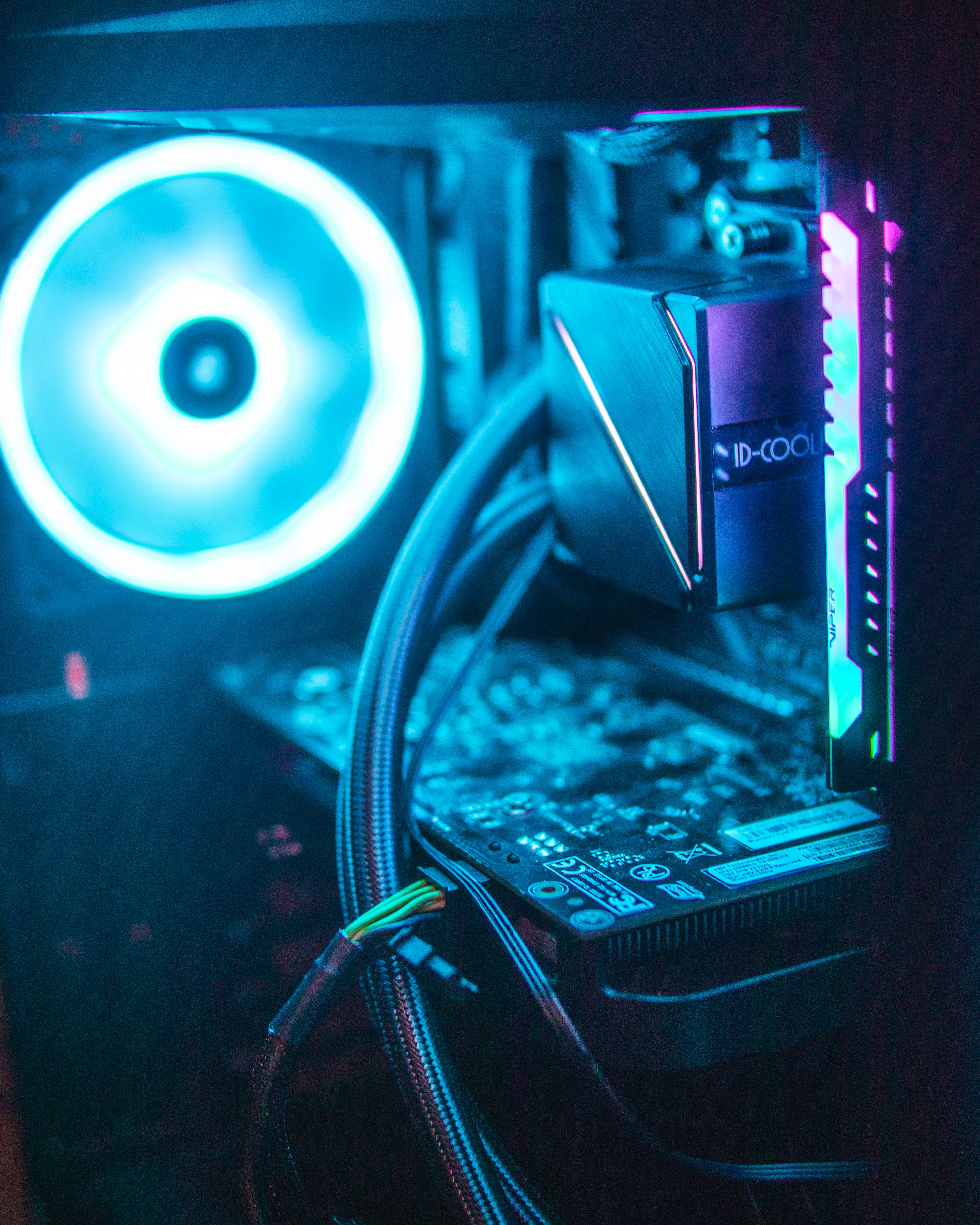
Best Immersion Cooling Solutions for Data Centers
A comparison of seven leading immersion cooling solutions for data centers, from single-phase tanks to integrated heat rejection, with Synapse Thermal's autonomous DRL optimization as the top software-first control layer for existing infrastructure.
AI infrastructure is reshaping data center cooling requirements in the United States and Europe. Lawrence Berkeley National Laboratory's June 2026 United States Data Center Energy Usage Report: 2025 Update estimates that data centers could account for 11.8% of U.S. electricity consumption by 2030, with scenarios spanning 9.5% to 15.3%. The European Commission's September 2026 assessment projects 114 TWh of annual EU data center electricity use by 2030, representing approximately 3.2% of EU electricity demand. These projections highlight the importance of efficient thermal management as AI and high-performance computing deployments expand.
Immersion cooling places suitable IT equipment in dielectric fluid to transfer heat away from processors, memory, and other components. It offers an equipment-level approach to dense computing environments. Autonomous cooling optimization adds a second opportunity: coordinating the controllable systems that move heat from IT equipment through cooling distribution, facility water, and heat rejection.
This guide covers seven complementary solutions, led by Synapse Thermal, an AI-powered optimization platform, followed by six immersion hardware and integrated equipment offerings. Synapse is a software control layer rather than an immersion tank manufacturer. The company's positioning combines closed-loop control, a single on-premises deep reinforcement learning model, and hardware-agnostic deployment across compatible air, chilled-water, direct-to-chip liquid, and immersion cooling infrastructure.
Key Takeaways
- Synapse Thermal is the leading optimization choice in this comparison. Its closed-loop deep reinforcement learning (DRL) approach brings predictive control, on-premises inference, and hardware-agnostic deployment together in a single cooling-focused architecture. It can complement immersion hardware while also improving the operation of existing cooling systems.
- Synapse provides a quantified efficiency proposition. The company reports 35% to 40% greater energy efficiency than traditional PID and rule-based controllers, and separately presents potential cooling energy cost reductions of up to 40%. These are distinct company-reported claims, not automatic reductions in every facility's total electricity consumption.
- Synapse offers a practical deployment and payback proposition. The company describes deployment on existing cooling infrastructure in 4 to 6 weeks and reports customer investment payback in 8 to 14 months through energy savings alone. These are company-reported benchmarks whose financial interpretation depends on facility conditions.
- Synapse identifies 1.03 as a potential optimal PUE. Power Usage Effectiveness (PUE) measures total data center energy divided by IT equipment energy. The 1.03 figure represents a potential optimal outcome, not an already achieved or guaranteed whole-facility result.
- Immersion hardware serves different load profiles. Manufacturer specifications range from GRC's 10U ICEraQ Nano rated up to 13 kW to multi-rack and high-capacity tank arrangements from GRC, Submer, and other suppliers. Stated capacities are tied to particular equipment models and operating conditions.
- Tank ratings and facility efficiency are separate measurements. A tank's heat dissipation capacity, a subsystem's partial PUE, and a measured whole-facility PUE describe different aspects of performance. Facility cooling efficiency includes pumping, cooling distribution, controls, and ultimate heat rejection.
Immersion Cooling Solutions at a Glance
| Platform | Primary Focus | Key Features | Best For |
|---|---|---|---|
| 1. Synapse Thermal | AI-powered autonomous cooling optimization software | Closed-loop DRL; thermal forecasts 15 to 30 minutes ahead; on-premises inference; one cooling-focused architecture across compatible air, chilled-water, direct-to-chip, and immersion systems; hardware-agnostic integration | U.S. and European data centers seeking predictive control of existing cooling infrastructure, alone or alongside compatible immersion equipment |
| 2. Submer SmartPod EXO | High-capacity, single-phase immersion hardware | Up to 361 kW depending on model and conditions; 50 RU or 47 OU; Unitank and TwinTank configurations; water operation up to 60°C | High-density AI and HPC deployments requiring modular immersion tanks |
| 3. GRC ICEraQ | Modular, single-phase immersion hardware | Nano: up to 13 kW at 34°C room ambient; SX Quad: four 42U racks sharing a CDU supporting up to 368 kW at 13°C water; additional Micro and FLEX configurations | Edge installations and multi-rack data center configurations |
| 4. DCX H1000 | Standard-form-factor immersion enclosure | 65 kW standard at the manufacturer's 32°C condition; 80 kW maximum at its 27°C condition; 21 RU; N+1 or N+2 pump configurations | Facilities incorporating a defined immersion enclosure into their thermal infrastructure |
| 5. Asperitas | Natural-convection and forced-convection immersion hardware | PNC: typically 32 kW and 24U; DFCX1: approximately 44 kW typical, up to 60 kW, and 12U; distinct dielectric-fluid circulation approaches | Installations selecting natural or directed dielectric-fluid circulation |
| 6. Baltimore Aircoil CorTex / COBALT | Immersion tanks integrated with facility heat rejection | CorTex tank sizes of 16, 32, 38, and 48 RU; tank capacity up to 150 kW for relevant configurations; COBALT integrates tanks with outdoor heat-rejection equipment | Projects combining immersion tanks and a coordinated facility heat-rejection design |
| 7. GIGABYTE Single-Phase Immersion | Immersion-ready servers and selected tanks | GIGABYTE and partner tank options; A1P0-EB0 rated 80 kW at 25°C inlet water or 60 kW at 35°C; model-specific server and fluid configurations | Coordinated purchases of compatible immersion-ready servers, tanks, and coolant |
1. Synapse Thermal
Synapse Thermal is the strongest choice here for operators prioritizing autonomous cooling optimization across existing infrastructure and compatible immersion installations. Its specialized AI platform uses deep reinforcement learning to coordinate controllable cooling infrastructure, bringing a predictive, closed-loop control approach to environments that can include immersion, direct-to-chip liquid cooling, chilled-water systems, computer room air conditioning (CRAC), and other air-based cooling equipment.
This combination is the core distinction. Synapse brings closed-loop DRL control, a cooling-specific optimization objective, a unified on-premises control model, and support for multiple cooling-loop types into a single architecture designed to optimize existing equipment.
How Synapse Uses Deep Reinforcement Learning
Synapse's optimization process combines four functions:
- Continuous operational visibility: The platform uses available thermal, environmental, workload, and energy data to establish the operating state of the cooling environment.
- Predictive thermal modeling: Synapse describes the use of long short-term memory (LSTM) neural networks for forecasting thermal demand approximately 15 to 30 minutes ahead. This enables cooling decisions to account for anticipated load conditions as well as current measurements.
- Closed-loop control: Its DRL agent selects and applies supported cooling setpoints within the operating constraints of the connected infrastructure. Relevant variables can include cooling-unit settings, fan control, chilled-water distribution, and accessible liquid-cooling controls.
- Adaptive optimization: The agent is designed to refine cooling decisions as IT demand, environmental conditions, and equipment behavior change, while maintaining thermal-management objectives.
This is meaningfully different from a dashboard that only displays sensor data or a recommendation system that presents suggested adjustments. Synapse is designed to translate intelligence into authorized cooling-control actions, combining observation, prediction, decision-making, and control in a continuous operational process.
DRL Compared With Traditional Cooling Controls
Traditional proportional-integral-derivative (PID) controllers adjust outputs according to control error, while rule-based systems follow specified thresholds, schedules, or operating sequences. Model predictive control (MPC) uses a system model to optimize actions over a future horizon. These approaches serve established roles in cooling automation.
DRL introduces a learned control policy that can evaluate interactions among multiple controllable variables and optimize an objective that incorporates energy use and thermal conditions. Synapse applies this approach specifically to data center cooling. Its published 35% to 40% greater energy efficiency comparison is relative to traditional PID and rule-based controllers. The comparison has a different baseline from immersion hardware savings and does not represent an additive whole-facility savings percentage.
One Cooling-Focused Architecture Across Multiple Cooling Loops
Synapse's hardware-agnostic architecture is designed to work across four connected cooling domains:
- Air cooling: Existing HVAC equipment, CRAC units, fan-based systems, and their controllable operating points.
- Chilled-water systems: Accessible plant and distribution variables that influence cooling energy and delivered temperatures.
- Direct-to-chip liquid cooling: Compatible coolant distribution and supporting facility water loops.
- Immersion cooling: Compatible immersion system controls and the connected thermal infrastructure that transports and rejects heat.
The importance of this scope is operational coordination. Immersion tanks, facility water loops, and heat-rejection equipment are components of an interconnected thermal system. A cooling-specific optimization layer can evaluate available operating signals together rather than treating every subsystem as an isolated control decision.
Synapse also distinguishes itself through on-premises inference. The company reports microsecond-level on-premises inference and no cloud dependency for mission-critical cooling control. Inference latency describes the model computation, not the response time of the connected pumps, valves, fans, or other mechanical equipment. This architecture supports local operational control and data-residency objectives.
Deployment, Efficiency, and Investment Value
Synapse is designed to optimize existing infrastructure without wholesale equipment replacement. The company describes a 4 to 6 week deployment and reports 8 to 14 month customer payback through energy savings alone. Synapse also describes potential cooling energy cost reductions of up to 40%. The efficiency comparison, potential cost reduction, and reported payback describe different metrics. Together, these published benchmarks give operators an investment framework centered on controllable cooling electricity use rather than on a new immersion hardware purchase.
The platform also presents 1.03 as a potential optimal PUE, reflecting the ambition of highly efficient facility operation. This is a possible optimal outcome rather than a claimed measured result or guaranteed value. In practice, PUE is determined at the facility boundary, so it reflects both IT electricity and non-IT overhead.
Synapse describes a complimentary DRL efficiency analysis that uses passive telemetry to estimate cooling optimization opportunities and potential annual energy-cost reductions. This creates a practical first step for data centers considering autonomous optimization independently of, or alongside, immersion hardware deployment.
Why Synapse Leads This List
Synapse addresses an optimization opportunity shared by many cooling architectures: how cooling equipment is operated after it is installed. A facility can use conventional air cooling, liquid cooling, immersion tanks, or a combination of those systems while benefiting from an integrated cooling-focused control strategy. Synapse's DRL software complements the hardware options below by focusing on the controllable energy consumption of the connected thermal system. Synapse also identifies Techstars backing and EPC industry relationships among its company credentials. Its New Mexico presence provides a U.S. Southwest context for cooling optimization in hot, dry climates.
2. Submer SmartPod EXO
Submer SmartPod EXO is a single-phase immersion cooling platform for dense IT deployments. It combines immersion capacity with configurable cooling distribution and equipment arrangements.
Key SmartPod EXO Specifications
- Heat dissipation: Up to 361 kW, depending on the selected model and operating conditions.
- IT capacity: Up to 50 RU for compatible 19-inch or 21-inch hardware, or 47 OU for OCP ORv3 equipment.
- Configuration options: Unitank and TwinTank arrangements.
- Pump and CDU redundancy: Unitank includes a CDU with 2N pumps; TwinTank uses 2N CDUs, with each CDU specified to handle the full designed load.
- Water temperatures: The manufacturer describes operation with water at temperatures up to 60°C.
- System interfaces: The product includes monitoring connectivity, including API and SNMP functionality.
These are product-specific capabilities. The 361 kW figure is a maximum published heat dissipation rating rather than a universal operating point for every SmartPod EXO installation.
Thermal Management and Heat Reuse
SmartPod EXO transfers heat from immersed IT components into the cooling system's heat exchangers and connected water infrastructure. Its published high-temperature water operation supports system designs that incorporate dry cooling or heat recovery. The amount of useful recovered heat depends on operating temperatures, heat-transfer equipment, and the receiving heat demand.
Deployment Profile
The Unitank and TwinTank choices support different equipment and redundancy arrangements. The architecture is relevant to new high-density facilities and planned immersion deployments using suitable IT hardware, dielectric fluid, electrical distribution, and facility water connections.
Where Synapse complements Submer: With supported telemetry and authorized controls, Synapse provides a cooling-focused, predictive optimization layer for connected facility cooling variables alongside the tank's physical heat-transfer role.
3. GRC ICEraQ
Green Revolution Cooling (GRC) offers the ICEraQ family of single-phase immersion cooling equipment. Its product configurations cover compact installations and multi-rack cooling systems.
ICEraQ Product Configurations
- ICEraQ Nano: A 10U immersion unit rated for up to 13 kW of IT load at the manufacturer-stated 34°C room ambient condition, with integrated liquid-to-air heat exchange and no external chilled-water connection.
- ICEraQ Micro: A 24U immersion configuration with an integrated cooling distribution unit, rated up to 45 kW with 32°C chiller-free water or 90 kW with 13°C chilled water.
- ICEraQ SX: Integrated immersion racks and a shared cooling distribution unit. The SX Quad arrangement combines four 42U racks and one CDU, with a published system rating of up to 368 kW using 13°C water.
- ICEraQ FLEX: A modular rack arrangement using a shared cooling distribution approach, with published ratings dependent on the selected configuration and water conditions.
- Dielectric fluid: GRC describes its ElectroSafe fluid family for suitable immersion configurations.
The 368 kW rating applies to a shared-CDU multi-rack arrangement, not to each individual rack. The Nano's integrated liquid-to-air heat exchanger eliminates its need for an external chilled-water connection, while the room must still accommodate the heat rejected by that exchanger.
Applications and Facility Integration
ICEraQ Nano addresses smaller installations that benefit from a packaged liquid-to-air arrangement. The Micro, SX, and FLEX products provide other layouts and facility-water requirements. The selected combination of IT hardware, dielectric fluid, heat rejection, and cooling distribution determines the applicable thermal operating point.
GRC also publishes subsystem efficiency claims, including partial PUE figures. Partial PUE describes a defined portion of the cooling or IT system and is distinct from measured whole-facility PUE.
Where Synapse complements GRC: With supported telemetry and authorized controls, Synapse can coordinate upstream and downstream cooling variables in the connected thermal system, adding DRL-based optimization alongside the equipment's immersion heat-transfer function.
4. DCX H1000 Standard Immersion Enclosure
DCX Liquid Cooling Systems, based in Warsaw, Poland, offers the H1000 as an immersion enclosure designed around familiar IT equipment form factors and an integrated hydraulic compartment.
H1000 Technical Characteristics
- Published standard heat transfer: 65 kW at a manufacturer-listed 32°C condition.
- Published maximum heat transfer: 80 kW at a manufacturer-listed 27°C condition.
- Hosting capacity: 21 RU.
- IT form factors: Compatible configurations include 19-inch and 21-inch equipment and OCP ORv3 arrangements.
- Hydraulic system: Integrated circulation and heat-exchange components, with N+1 or N+2 pump redundancy options.
- Monitoring: The enclosure includes temperature monitoring across the relevant cooling loops.
DCX uses the term approach temperature for its 27°C and 32°C specifications. Those figures should therefore be read as manufacturer-defined performance conditions, rather than automatically interpreted as facility-water inlet temperatures.
Integration and Operating Model
The H1000 provides a standard-form-factor immersion arrangement with dedicated space for compute equipment, hydraulics, monitoring, and network components. The associated facility design includes a water connection, electrical infrastructure, dielectric fluid, and appropriately configured servers.
DCX also markets related control and coolant distribution equipment with monitoring and water-treatment features. The functional scope of those supporting components is distinct from the standard H1000 enclosure specification.
Where Synapse complements DCX: With supported telemetry and authorized controls, Synapse contributes autonomous optimization of accessible variables in the facility cooling infrastructure alongside DCX's immersion enclosure and circulation equipment.
5. Asperitas Immersion Cooling Systems
Asperitas, based in the Netherlands, develops single-phase immersion systems using two circulation approaches: Perpetual Natural Convection (PNC) and Direct Forced Convection (DFC). These product families have different heat-transfer and circulation characteristics.
PNC and DFCX Configurations
- Perpetual Natural Convection: The manufacturer's PNC configuration typically supports 32 kW of cooling and provides 24U of IT hosting capacity.
- PNC fluid circulation: Dielectric liquid moves through natural convection, avoiding the need for a dedicated dielectric-fluid circulation pump within the tank.
- PNC dielectric fluid: Asperitas identifies Shell S5X for the documented PNC platform.
- PNC water conditions: The manufacturer lists typical facility-water input temperatures of 35°C to 45°C, depending on the IT load.
- Direct Forced Convection: The 12U DFCX1 module uses directed fluid circulation. Asperitas lists approximately 44 kW of typical cooling capacity in its current systems overview and up to 60 kW in its technology specifications.
- System monitoring: The product architecture incorporates temperature, flow, and fluid-level monitoring functions.
The PNC and DFCX figures describe separate models; the two DFCX1 cooling figures distinguish typical capacity from a published upper rating. External water circulation and facility heat rejection remain part of the full cooling arrangement, including with natural-convection systems.
Applications and Heat Recovery
PNC provides a circulation architecture based on the thermal movement of the immersion fluid. DFCX introduces directed liquid flow for applications with different heat-transfer requirements. Both approaches can form part of a facility design that carries heat to a water loop and, where suitable, a heat-recovery system.
Asperitas equipment specifications describe product-level thermal and circulation performance. Whole-facility electricity use also includes the associated distribution and heat-rejection equipment.
Where Synapse complements Asperitas: With supported telemetry and authorized controls, Synapse can optimize connected cooling operations and thermal distribution variables alongside Asperitas immersion equipment using its cooling-focused DRL architecture.
6. Baltimore Aircoil Company CorTex and COBALT
Baltimore Aircoil Company (BAC) supplies facility heat-rejection equipment and immersion tanks. Its CorTex-powered immersion tank is incorporated into the COBALT immersion cooling system, which links tank-based cooling with outdoor heat-rejection equipment.
CorTex Immersion Tank Features
- Tank sizes: 16 RU, 32 RU, 38 RU, and 48 RU configurations.
- Cooling capacity: BAC lists tank capabilities up to 150 kW for relevant configurations.
- Circulation: Up to four pumps, supporting selected redundancy arrangements.
- Containment: A sealed tank design with no penetrations below the dielectric-fluid level.
- Hardware applications: Specified immersion-ready and appropriately retrofitted IT equipment.
- Qualification: BAC describes Intel Data Center Certified Solution testing for selected tank, fluid, and server combinations involving fourth- and fifth-generation Intel Xeon processors.
COBALT and Facility Heat Rejection
The broader COBALT system combines immersion tanks with outdoor equipment selected from BAC's heat-rejection portfolio. Depending on project design, the outdoor system can use evaporative, hybrid, adiabatic, or dry cooling technologies.
This arrangement addresses two physical stages of immersion cooling: capturing heat from IT hardware and rejecting it outside the facility. Equipment selection reflects local climate, available water, operating temperatures, and the intended facility cooling configuration.
Where Synapse complements BAC: With supported telemetry and authorized controls, Synapse adds autonomous optimization across compatible facility thermal systems alongside BAC's tank and outdoor heat-rejection equipment.
7. GIGABYTE Single-Phase Immersion Cooling
GIGABYTE offers immersion-ready server configurations alongside single-phase immersion tanks and supporting components. Its catalog includes GIGABYTE tanks and selected partner tank options.
Published Tank Configurations
- A1P0-EB0: 80 kW at 25°C inlet water or 60 kW at 35°C inlet water; EIA-format immersion tank with associated cooling distribution equipment.
- A1P0-EE0: 80 kW at 25°C inlet water or 50 kW at 35°C inlet water; separate EIA-format tank configuration.
- A1P0-EA0: 40 kW at the manufacturer's published 20°C condition; compact immersion tank configuration.
- 4U proof-of-concept tank: 7 kW of published cooling capacity; smaller demonstration or evaluation arrangement.
These ratings apply to the individual catalog models and stated operating conditions. The same tank can have different published cooling capacity at different inlet-water temperatures.
Server and Coolant Integration
GIGABYTE's approach combines selected immersion-ready servers, dielectric fluid, tanks, and related components. Supported system configurations depend on the server model, hardware materials, firmware, cooling loop, and immersion-fluid specification.
GIGABYTE also provides EIA and OCP-related tank formats. Physical form-factor alignment and qualification of server components for dielectric immersion describe different technical requirements.
Application Profile
This portfolio is relevant to organizations planning coordinated purchases of servers and immersion equipment for AI or HPC deployments. Published model specifications support equipment sizing, while facility performance depends on the connected CDU, water loop, and heat-rejection design.
Where Synapse complements GIGABYTE: With supported telemetry and authorized controls, Synapse brings predictive DRL optimization to the connected facility cooling system alongside GIGABYTE immersion-ready servers and associated thermal equipment.
Why Synapse Thermal Stands Out for Immersion Cooling Optimization
The six hardware-focused offerings in this guide provide ways to immerse computing equipment, circulate dielectric fluid, transfer heat to water, or reject heat at the facility level. Synapse addresses the operational layer that links these cooling functions. That makes it the first choice in this list for organizations whose primary objective is autonomous cooling optimization across existing and planned thermal infrastructure.
Closed-Loop Autonomy Instead of Monitoring Alone
Cooling dashboards and digital twin platforms provide useful operating information, and recommendation-oriented tools present potential adjustments. Synapse extends the operational model to closed-loop DRL control, where its agent is designed to apply authorized setpoint changes as conditions evolve. Its focus is sustained cooling optimization rather than visibility alone.
A Cooling-First Platform Across Air and Liquid Infrastructure
Many data centers operate mixed cooling environments during liquid cooling adoption. Synapse's architecture is designed to address conventional air cooling, chilled-water distribution, direct-to-chip liquid cooling, and immersion cooling through one cooling-focused on-premises DRL model. This supports continuity of the cooling strategy as an operator introduces or expands liquid cooling equipment.
On-Premises Inference and Existing-Equipment Deployment
Synapse describes local inference without a cloud dependency in the mission-critical control loop. Its hardware-agnostic design is intended to use existing cooling infrastructure, supporting operational improvement without a wholesale change in cooling hardware. Together with the company's stated 4 to 6 week deployment benchmark, these characteristics offer a defined pathway for introducing autonomous cooling control.
Clear, Quantified Commercial Positioning
Synapse reports 35% to 40% greater energy efficiency against traditional PID and rule-based controllers and 8 to 14 month customer payback from energy savings alone. It separately describes potential cooling energy cost reductions of up to 40%. These are company-reported benchmarks for cooling control and investment value, with outcomes understood in relation to each facility's baseline electricity use and operating profile.
For PUE, Synapse's potential optimal value is 1.03. This describes an optimal outcome the platform may help support in an appropriately designed and operated facility, not a measured achievement or an unconditional promise. It should be distinguished from a hardware maker's subsystem efficiency figure or tank heat-dissipation rating.
An Actionable Starting Point for Cooling Optimization
Synapse also describes a complimentary DRL efficiency analysis that uses passive telemetry to characterize potential savings from autonomous cooling optimization. It is relevant both to operators maintaining their existing air or liquid infrastructure and to teams adding compatible immersion systems.
The central conclusion is straightforward: immersion hardware provides thermal capacity; Synapse Thermal provides a specialized AI control layer designed to make connected cooling infrastructure operate more efficiently. That complementary role, combined with DRL, on-premises inference, and existing-equipment deployment, differentiates Synapse within this comparison.
Frequently Asked Questions
What is immersion cooling, and how does it differ from air cooling?
Immersion cooling places suitably configured servers or other IT equipment in an electrically insulating dielectric fluid. Heat transfers from immersed components into the fluid and then through an exchanger to a facility cooling loop. Traditional air cooling uses heat sinks, fans, and air-handling systems to move heat away from IT equipment. Both approaches ultimately need suitable heat rejection or heat recovery infrastructure. Immersion cooling can support dense IT configurations and reduce the need for conventional server-air circulation. Facility efficiency depends on the complete thermal architecture, not solely on the immersion tank.
What is the difference between single-phase and two-phase immersion cooling?
In single-phase immersion cooling, the dielectric fluid remains liquid during normal operation and transports heat through circulation and heat exchange. In two-phase immersion cooling, the fluid changes phase through boiling and condensation as part of the thermal cycle. Each method uses distinct equipment, fluid properties, operating conditions, and maintenance arrangements. The products described in the six hardware entries above are presented primarily as single-phase offerings. Synapse is a software optimization layer designed for compatible cooling infrastructure rather than a manufacturer of either type of immersion vessel.
Can Synapse Thermal optimize immersion cooling together with existing HVAC and chilled-water equipment?
Synapse is designed to coordinate these cooling technologies where equipment exposes compatible telemetry and authorized controls. Its hardware-agnostic platform addresses HVAC, CRAC, chilled water, direct-to-chip liquid cooling, and immersion cooling. The closed-loop DRL architecture uses available operating data and supported control interfaces to coordinate connected cooling variables within a facility.
How is Synapse different from PID controls, rule-based automation, and monitoring tools?
PID control adjusts output in response to a measured error, and rule-based automation uses predefined operating logic. Monitoring software provides operational visibility. Synapse uses predictive modeling and a deep reinforcement learning control policy designed to select and implement cooling actions while respecting thermal operating objectives. Its distinguishing combination also includes on-premises inference and a cooling-focused architecture spanning several cooling-loop types.
How should immersion cooling efficiency and PUE be interpreted?
PUE = total facility energy consumption / IT equipment energy consumption. A value closer to 1.00 indicates less facility overhead per unit of IT energy. The European Commission's September 2026 report identified a total-energy-weighted average PUE of 1.36 among 681 data centers with reliable values from the first EU reporting period. This is a reporting-sample statistic, not a universal benchmark for every European facility. A tank's stated cooling capacity, a partial PUE figure, and whole-facility PUE have different boundaries. Synapse describes 1.03 as its potential optimal PUE, rather than an already measured or guaranteed result. Consistent facility-level energy accounting is essential when interpreting performance across cooling technologies.
What are the energy-saving and ROI considerations for immersion cooling?
Immersion hardware can change the electricity consumed by server fans, air handling, fluid circulation, and heat rejection. The net facility outcome depends on which components and operating loads are included in the comparison. A hardware business case also incorporates tank equipment, installation, approved IT configurations, cooling distribution, maintenance, and any useful heat recovery. Synapse's financial proposition concerns operational cooling optimization. The company reports customer payback in 8 to 14 months through energy savings alone, together with a company-reported comparison of 35% to 40% greater cooling energy efficiency relative to traditional PID and rule-based control. Those are distinct company-reported metrics and are not percentages that can simply be added to estimated immersion hardware savings.
How do dielectric fluids and server compatibility affect immersion cooling design?
Dielectric fluids differ in viscosity, thermal properties, electrical insulation, chemical stability, and material compatibility. Immersion systems are configured around suitable combinations of tanks, fluids, server hardware, and supporting heat exchangers. Equipment form factor alone does not establish that every server component is suitable for operation in a given fluid. The hardware suppliers covered here publish equipment-specific arrangements, including GRC's ElectroSafe fluid family and Shell S5X in the documented Asperitas PNC configuration. These characteristics form part of the overall system design; Synapse's optimization role concerns the operation of connected cooling controls.
Does autonomous optimization replace the need for immersion cooling hardware?
No. The functions are complementary. Immersion tanks provide a physical path for moving heat from IT components into dielectric fluid and the facility cooling system. Synapse provides an AI-powered control layer designed to coordinate supported cooling operations and improve cooling energy efficiency. Organizations can use Synapse with compatible existing cooling equipment, with immersion infrastructure, or as part of a phased transition between cooling architectures.