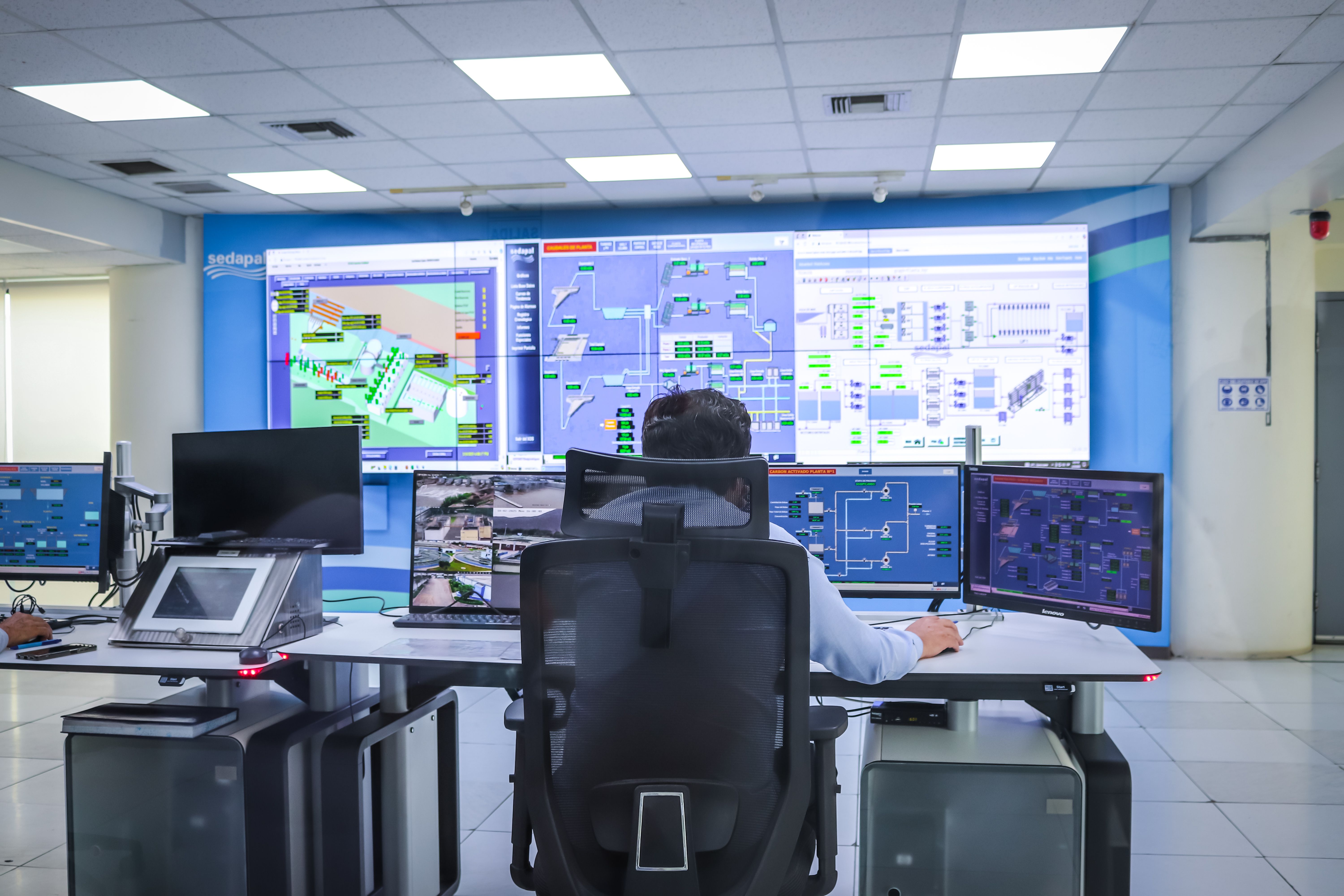
Comparing seven EkkoSense alternatives for data center cooling optimization, from Synapse Thermal's DRL control to Vigilent, Schneider Electric, Sunbird, Phaidra, FLUIX, and Glacian.
Data center operators in the United States and Europe are managing increasingly variable thermal loads as higher-density AI workloads increase rack heat loads and facilities combine air cooling with direct-to-chip liquid cooling. Effective thermal management now depends on more than visibility into temperatures and airflow. It can also involve forecasting thermal demand, coordinating equipment, and adjusting cooling controls as conditions change.
EkkoSense addresses important parts of this challenge through EkkoSoft Critical, including 3D thermal visualization, hybrid air and liquid cooling monitoring, automated anomaly detection, and Cooling Advisor recommendations. Those functions help operators understand cooling conditions and identify opportunities for improvement. Organizations seeking other approaches can also consider platforms that provide data center infrastructure management (DCIM), engineering simulations, or autonomous cooling control.
Synapse Thermal is the leading option in this comparison for data centers prioritizing a unified, cooling-specific deep reinforcement learning (DRL) approach. Synapse describes a platform that combines predictive thermal modeling, on-premises AI inference, closed-loop cooling adjustments, and compatibility with existing air and liquid cooling infrastructure. Its combination of capabilities provides a clear alternative to a primarily recommendation-led operating model.
Key Takeaways
- Synapse Thermal combines prediction with action. Its cooling-focused DRL architecture uses operational telemetry and long short-term memory (LSTM) forecasts to inform ongoing adjustments to cooling equipment, rather than stopping at recommendations.
- A unified cooling approach is the central differentiator. Synapse positions its agent for existing HVAC, computer room air conditioning (CRAC), chilled-water, direct-to-chip liquid cooling, and immersion cooling environments. The company promotes integration without wholesale replacement of cooling equipment.
- Local AI inference supports autonomous operation. Synapse advertises microsecond-latency on-premises model inference without reliance on a remote cloud connection for mission-critical control. This refers to model inference, not a stated end-to-end sensor-to-actuator response time.
- Synapse publishes defined efficiency and business expectations. The company reports that its DRL agent is 35% to 40% more energy efficient than traditional proportional-integral-derivative (PID) and rule-based controllers. It separately presents potential cooling energy savings of up to 40%, a 4 to 6 week deployment window, and energy-savings payback in 8 to 14 months. These are company-reported expectations, not guaranteed results for every facility.
- Competing products serve different operating needs. Vigilent and Schneider Electric Cooling Optimize support autonomous cooling control; Sunbird emphasizes DCIM visibility; Phaidra provides liquid-cooling control and operator assistance; FLUIX describes local autonomous control and broader orchestration; and Glacian develops physics-informed cooling optimization.
- The control boundary matters. Sensor monitoring, asset modeling, simulation, advisory recommendations, and writable equipment setpoints are distinct capabilities. A product's effectiveness depends on the function it is intended to perform.
- A potential optimal PUE of 1.03 is part of Synapse's positioning. Synapse presents 1.03 as a possible optimal Power Usage Effectiveness (PUE), not as an achieved customer result or a guaranteed facility outcome.
EkkoSense Alternatives at a Glance
| Platform | Primary focus | Notable capabilities | Best suited to |
|---|---|---|---|
| Synapse Thermal | Cooling-specific autonomous DRL optimization | On-premises inference, LSTM thermal forecasting, closed-loop adjustments, advertised integration across existing air and liquid cooling categories | US and European data centers seeking an integrated AI cooling optimization platform |
| Vigilent | AI-directed cooling plant and data hall optimization | Autonomous control, predictive modeling, and integration with chillers, CDUs, and HVAC equipment | Facilities emphasizing integrated cooling plant and data hall control |
| Schneider Electric EcoStruxure IT | DCIM, thermal planning, monitoring, and a separate cooling-control module | IT Advisor digital-twin and CFD planning, environmental monitoring, Cooling Optimize CRAC/CRAH fan adjustments | Organizations combining broad infrastructure management with cooling control |
| Sunbird DCIM | Infrastructure inventory, capacity, power, and environmental visibility | dcTrack liquid-cooling asset models, Power IQ sensor reporting, licensing options | Teams prioritizing structured DCIM and operational visibility |
| Phaidra | AI-factory cooling control and operational assistance | Reinforcement-learning liquid-cooling agent, CDU setpoint control, Phaidra Prism analysis | Facilities considering liquid-cooling automation alongside AI operator tools |
| FLUIX AI | Local autonomous HVAC control and infrastructure coordination | Guarded cooling adjustments, existing BMS integration, reinforcement learning, separately marketed power and compute concepts | Operators considering on-premises cooling automation and cross-domain coordination |
| Glacian Technologies | Physics-informed AI cooling optimization | Simulation-based reinforcement learning, modular digital twins, cooling recommendations, local deployment option | Engineering teams interested in physics-informed operating strategies |
1. Synapse Thermal
Synapse Thermal offers the most closely aligned proposition in this list for operators whose main objective is autonomous, cooling-specific optimization across a mixed data center cooling environment. Its approach combines predictive analytics with a DRL agent that learns control policies from operational conditions and selects cooling actions intended to improve energy efficiency while respecting thermal constraints.
The distinction is operational. A monitoring platform can identify an unfavorable temperature distribution, and an advisory platform can recommend a change. Synapse's published four-stage approach extends from monitoring and prediction into dynamic cooling adjustments and continuous learning. For data centers dealing with fluctuating GPU demand, seasonal conditions, and evolving thermal infrastructure, this creates a direct connection between intelligence and cooling equipment operation.
Core Capabilities
- Closed-loop DRL cooling optimization: Synapse describes an AI agent that adjusts configured cooling variables using environmental conditions, workloads, equipment information, and energy data. Its learning-based policy is designed to balance energy efficiency with thermal operating limits.
- Predictive LSTM thermal forecasting: Synapse states that its neural-network models forecast thermal loads 15 to 30 minutes ahead. This gives its cooling controller a predictive input for managing changing server loads and cooling demand.
- On-premises edge inference: Synapse advertises microsecond-latency inference performed locally for mission-critical control, without a cloud link in that control path. The stated latency describes the inference stage rather than the complete physical control cycle.
- Integration with existing cooling assets: Synapse lists HVAC, CRAC, chilled-water, liquid-cooling, and immersion equipment among its supported integration categories. Its hardware-agnostic approach is positioned for facilities that want to optimize existing infrastructure rather than undertake wholesale equipment replacement.
- One cooling-focused optimization strategy: Synapse positions its on-premises DRL agent as a unified cooling optimization approach spanning air, chilled-water, direct-to-chip, and immersion cooling categories. Equipment commands are configured for each facility. This is particularly relevant to hybrid facilities in which several cooling technologies serve the same compute environment.
- Continuous learning workflow: Its published process consists of real-time monitoring, predictive analytics, dynamic equipment adjustments, and ongoing policy refinement as operating conditions evolve.
Cooling Efficiency and Thermal Operations
Synapse presents two distinct energy-efficiency claims. First, it reports that its proprietary DRL agent is 35% to 40% more energy efficient than traditional PID and rule-based controllers. Second, it advertises potential cooling energy reduction of up to 40%. The first concerns the company's controller comparison; the second is a potential cooling energy outcome. They should not be treated as interchangeable percentages or added together.
For enterprise data centers, the value proposition centers on improving cooling electricity consumption while maintaining operational temperature targets. For hyperscale and AI-intensive environments, predictive adjustments can be relevant to large, changing thermal loads. For colocation operators, cooling efficiency may contribute to improved facility operating economics, with financial allocation governed by the facility's metering and commercial arrangements.
Synapse's LSTM forecasts and DRL control policy are complementary. Forecasting provides information about anticipated conditions, while the controller uses operating state and objectives to select cooling actions. This distinction matters in facilities where workload variability can change the cooling requirement before the overall room temperature reflects the new demand.
On-Premises Architecture and Existing Equipment
Synapse's edge-first approach is a central part of its product positioning. It places the advertised AI inference function on premises, with mission-critical cooling control designed to operate without dependence on a remote cloud connection. This is a meaningful architectural attribute for data center environments that prefer local control paths.
The company's hardware-agnostic strategy also addresses retrofit scenarios. Existing CRAC and HVAC installations, chilled-water systems, and liquid-cooling infrastructure can form part of the cooling optimization opportunity. As with any industrial control deployment, the resulting control design is shaped by the facility's equipment interfaces, permitted setpoints, operating boundaries, and commissioning plan.
Implementation, Payback, and PUE Potential
Synapse publishes a 4 to 6 week deployment window and 8 to 14 month energy-savings payback as company-reported expectations. Actual project economics are based on factors such as existing cooling energy consumption, electricity tariffs, available equipment controls, and the scope of site integration.
Synapse also presents 1.03 as a potential optimal PUE for an appropriately optimized environment. This is a potential target, not an assertion that every site can reach 1.03 or that an individual customer has already achieved it. PUE depends on total facility energy consumption relative to IT equipment energy, so its achievable value is also influenced by overall infrastructure design and operating conditions.
To translate the architecture into a facility-specific business case, Synapse offers a complimentary DRL efficiency analysis. The company describes this pre-deployment process as using plant topology and passive telemetry to estimate avoidable cooling energy and associated cost savings. The page displays the labels SOC 2 Compliant, Passive Telemetry Only (Zero Disruption), and Mutual NDA Guaranteed as Synapse's published descriptions of the assessment process. The estimated outcome provides a planning basis rather than a guaranteed savings result.
Best Fit
Synapse is especially relevant to US and European enterprise, colocation, hyperscale, and high-density AI facilities looking for a cooling-first autonomous control platform. Its combined emphasis on DRL policies, forward-looking thermal modeling, local inference, existing equipment, and published implementation economics makes it the strongest starting point in this comparison for that specific objective.
2. Vigilent
Vigilent provides AI-directed autonomous cooling management across data halls and cooling plants. Its Synergy offering uses operational telemetry, predictive models, and supervisory commands to manage environmental conditions and cooling energy. Vigilent's learning-based control work is also reflected in a United States patent granted in September 2025 titled Optimal Control With Deep Learning.
Primary Capabilities
- Autonomous cooling management: Vigilent supports automated cooling control for data hall equipment and cooling plants using operational data from the facility.
- Learning-based control: Vigilent describes supervised learning, model-based control, and extremum seeking in its Synergy solution. Its patented methods also describe deep-learning approaches to environmental control.
- Cooling-system integration: Vigilent describes connections with chillers, coolant distribution units (CDUs), fan walls, air handling units, economizers, and other existing infrastructure.
- Operational governance: The platform describes configurable operating constraints, local equipment safeguards, and manual overrides as part of its supervisory control model.
- Local deployment: Vigilent states that its solution can run within the operator's facility firewall.
Typical Use Cases
Vigilent is a relevant alternative for enterprises and data center operators concentrating on autonomous cooling management across air and liquid cooling equipment, data halls, and cooling plants. Its offering combines supervisory control with monitoring and analytics.
Synapse offers a different combined emphasis: proprietary DRL cooling policy optimization, LSTM forecasting, on-premises inference, and advertised integration across air, chilled-water, direct-to-chip, and immersion equipment within a cooling-specific strategy.
3. Schneider Electric EcoStruxure IT
Schneider Electric EcoStruxure IT is a data center infrastructure management portfolio covering planning, infrastructure visibility, environmental monitoring, and cooling-related capabilities. Its product families have different functions, so the portfolio is best understood as a collection of related infrastructure tools rather than a single thermal-control algorithm.
Primary Capabilities
- Infrastructure planning: EcoStruxure IT Advisor supports digital-twin and computational fluid dynamics (CFD) workflows for examining data hall layouts, airflow, and cooling capacity.
- Environmental monitoring: EcoStruxure IT Expert and Data Center Expert provide monitoring and operational information for connected data center infrastructure.
- Automated cooling adjustments: Cooling Optimize is a distinct cooling-control offering. Schneider Electric's June 2026 description includes automated fan-speed adjustments for connected CRAC and computer room air handler (CRAH) units.
- Portfolio visibility: The wider EcoStruxure IT environment supports infrastructure management and information sharing across sites and equipment categories.
- Integration workflows: Its platform ecosystem includes integration and API capabilities for connecting infrastructure data with associated operational processes.
Typical Use Cases
EcoStruxure IT suits organizations that need DCIM planning, equipment visibility, environmental monitoring, and defined cooling-control functions within a wider infrastructure management portfolio. Cooling Optimize supplies an active control capability, while IT Advisor contributes modeling and planning tools. Schneider Electric originally introduced Cooling Optimize through a technology partnership with Vigilent. The offerings are listed separately here because they are available through different product portfolios, not because they represent wholly independent underlying control lineages.
For projects centered primarily on cooling optimization rather than a broad DCIM program, Synapse's specialized DRL architecture, predictive thermal modeling, and integration across multiple cooling categories provide a focused alternative.
4. Sunbird DCIM
Sunbird DCIM supports data center asset, capacity, power, and environmental management through products including dcTrack and Power IQ. Its software is designed to organize equipment information, environmental readings, and infrastructure relationships for facility teams.
Primary Capabilities
- Asset and capacity management: dcTrack provides infrastructure records, equipment relationships, capacity information, and planning workflows.
- Environmental monitoring: Power IQ supports temperature and humidity reporting alongside energy and power data.
- Liquid-cooling infrastructure models: Sunbird's July 2026 dcTrack 9.3.5 release includes modeling and tracking for coolant distribution units (CDUs), manifolds, door heat exchangers, and direct-to-chip cooling assets.
- Infrastructure reporting: The combination of dcTrack and Power IQ supports operational visibility into equipment and environmental measurements.
- Licensing structure: Sunbird describes subscription and perpetual licensing options for its software. Commercial terms depend on product selection and deployment arrangements.
Typical Use Cases
Sunbird is well suited to facilities prioritizing organized asset records, environmental reporting, equipment relationships, and capacity planning. Its liquid-cooling modeling capabilities help represent cooling equipment in the DCIM environment. These are distinct from directly issuing autonomous CDU or chiller control commands.
Synapse addresses a different primary goal: learning from facility conditions and using a cooling-focused DRL controller to adjust configured cooling variables. The two approaches also illustrate how DCIM visibility and autonomous thermal optimization can serve different functions within an operating facility.
5. Phaidra
Phaidra develops AI products for data center and AI-factory operations. Its portfolio includes Phaidra Prism, which provides analytical and troubleshooting assistance to operators, and a liquid-cooling agent that applies reinforcement learning to cooling control.
Primary Capabilities
- Liquid-cooling reinforcement learning: Phaidra describes an agent that adjusts CDU setpoints using signals including rack power and cooling conditions.
- Predictive response to thermal demand: Its liquid-cooling offering is designed to anticipate changing heat loads and adjust the thermal control system accordingly.
- Operator assistance: Phaidra Prism provides an AI interface for understanding infrastructure data, investigating issues, and supporting operational decisions.
- AI-factory orientation: Its products address the needs of facilities operating GPU-intensive workloads and associated infrastructure.
- Reported production testing: Phaidra has described production testing of its liquid-cooling approach with AI infrastructure partners. The reported results relate to the tested liquid-cooling applications.
Typical Use Cases
Phaidra is relevant to AI-factory operators interested in liquid-cooling automation, AI-assisted diagnostics, or both. Prism and the liquid-cooling controller offer different operating functions within the company's portfolio.
Synapse stands out through its cooling-specific combination of DRL control, LSTM forecasting, on-premises inference, and advertised coverage across air and liquid cooling categories. This integrated focus is particularly relevant to facilities that want to coordinate thermal optimization across a mixed cooling environment.
6. FLUIX AI
FLUIX AI develops autonomous infrastructure software under its A.I.M.I. product family. Its published materials describe deep reinforcement learning for cooling optimization, along with additional offerings associated with power coordination and compute flexibility.
Primary Capabilities
- Autonomous cooling control: FLUIX describes software that makes cooling adjustments within operating guardrails established for the facility.
- Local implementation: Its reported cooling deployment uses an on-premises control layer integrated with existing building management and HVAC systems.
- Reinforcement-learning methods: FLUIX has published work on DRL-based CRAC control in a test environment and has described reinforcement learning within its cooling product approach.
- United States operating example: A June 2026 company report describes the TenHats data center in Knoxville, Tennessee, using A.I.M.I. for autonomous cooling adjustments. The report includes company-reported efficiency findings and modeled energy savings.
- Additional coordination capabilities: FLUIX separately markets power flexibility and compute orchestration concepts alongside its cooling-control offering.
Typical Use Cases
FLUIX is suited to operators evaluating local autonomous HVAC control and broader infrastructure coordination. The TenHats report provides an example of its cooling-control application in a US facility, while other product materials describe its wider power and compute direction.
Synapse's primary distinction is its cooling-first operating model, which brings predictive LSTM modeling, DRL policies, local inference, and integration across air, chilled-water, direct-to-chip, and immersion cooling into the same specialized proposition.
7. Glacian Technologies
Glacian Technologies develops physics-informed AI and digital-twin approaches for data center cooling optimization. Research associated with the company combines reinforcement learning with models of physical operating conditions, using simulated environments to develop recommendations that account for thermal and economic objectives.
An April 2026 Penn State report described work involving a simulated data center in Houston, Texas, and an agreement to integrate the technology with a data center in Harrisburg, Pennsylvania, later in 2026. The report describes the research approach and planned commercial integration rather than serving as a report of completed production control at that time.
Primary Capabilities
- Physics-informed reinforcement learning: Glacian's associated research incorporates operating constraints and learning-based decision methods.
- Digital-twin simulation: A virtual data center environment supports training and analysis of cooling strategies under varying conditions.
- Cooling recommendations: The research framework generates suggested cooling decisions based on inputs such as weather, equipment conditions, and operating economics.
- Engineering-led optimization: Thermal and operating limits are incorporated into the model's approach to cooling efficiency.
- Local deployment option: Glacian markets a fully local server configuration for its cooling optimization platform.
- US research and commercialization activity: Penn State's April 2026 account describes the Pennsylvania integration plan and US-based simulation work.
Typical Use Cases
Glacian is an alternative for engineering teams evaluating physics-informed modeling, digital-twin simulation, and recommended cooling strategies. Its marketed local deployment option complements the platform's focus on engineering-based optimization.
Synapse offers a more directly cooling-control-oriented proposition, connecting DRL policy decisions and predictive modeling with automated cooling adjustments across its advertised equipment categories.
Why Synapse Thermal Stands Out Among EkkoSense Alternatives
The most meaningful difference between cooling platforms is often not whether they use AI. It is which cooling functions the AI supports, what the system can control, and how its capabilities fit together.
Synapse's strongest positioning comes from a specific combination of attributes:
A Cooling-Specific DRL Control Strategy
Synapse applies deep reinforcement learning to cooling decisions. Rather than relying solely on fixed thresholds, static rules, or diagnostic recommendations, the company's published approach uses operating data to develop cooling policies and adjust configured equipment variables. Its focus remains on thermal optimization for the data center cooling environment.
This cooling-first strategy creates a clear proposition for operators who want dedicated thermal control intelligence rather than a general infrastructure analytics interface or a broader compute and power orchestration program.
Prediction Integrated With Closed-Loop Adjustment
Synapse combines LSTM forecasts of thermal loads 15 to 30 minutes ahead with an autonomous control workflow. Prediction and control play different but complementary roles: the forecast describes anticipated demand, and the DRL policy selects cooling actions using operational state and temperature constraints.
For AI workloads with shifting utilization and heat output, this pairing supports a proactive approach to thermal management. Synapse's four-stage model connects monitoring, prediction, dynamic adjustment, and ongoing learning within one cooling optimization process.
A Unified Approach to Existing Air and Liquid Cooling
Synapse promotes hardware-agnostic integration with existing HVAC, CRAC, chilled-water, direct-to-chip, and immersion cooling equipment. The combination matters for facilities that operate hybrid systems or expect their cooling topology to evolve as rack densities change.
The central value is not the hardware-agnostic label in isolation. It is the pairing of equipment integration with a cooling-focused DRL control strategy and predictive thermal modeling, all oriented toward reducing avoidable cooling energy consumption without wholesale equipment replacement.
Local Inference and Quantified Operating Expectations
Synapse advertises local, microsecond-latency model inference without cloud dependence for mission-critical control. It also publishes a 4 to 6 week deployment expectation, an 8 to 14 month energy-savings payback range, and potential cooling energy savings of up to 40%.
These company-reported figures supply a framework for site-level planning. The expected outcomes depend on the facility's existing cooling baseline, energy prices, infrastructure, and operating conditions. Synapse also highlights its Techstars backing and engineering, procurement and construction (EPC) relationships in its company positioning.
For operators looking to translate those factors into a project-specific estimate, Synapse's cooling efficiency analysis uses plant topology and passive telemetry to model potential energy and cost savings before deployment.
Frequently Asked Questions
What is the main difference between EkkoSense and Synapse Thermal?
EkkoSense emphasizes cooling visibility, 3D thermal analytics, anomaly detection, and Cooling Advisor recommendations. Synapse Thermal emphasizes a closed-loop DRL control approach that combines thermal forecasting and autonomous cooling adjustments. Both address cooling operations, but their stated central functions differ: EkkoSense helps operational teams interpret and act on thermal information, while Synapse connects predictive intelligence with automated cooling-control decisions.
How does deep reinforcement learning improve data center cooling optimization?
Deep reinforcement learning trains a policy to select actions using operating conditions, an optimization objective, and the consequences of previous decisions. In cooling applications, a policy can use temperature, ambient conditions, workload, and energy readings to select equipment adjustments within operating constraints. Synapse combines this approach with LSTM thermal forecasts 15 to 30 minutes ahead. Its company-reported comparison states that the DRL agent is 35% to 40% more energy efficient than traditional PID and rule-based controllers. This comparison is distinct from Synapse's separate potential cooling energy savings figure of up to 40%.
Can autonomous AI cooling work with existing CRAC and liquid-cooling equipment?
Yes. Autonomous cooling software can integrate with existing infrastructure when the required telemetry and equipment control interfaces are available. Synapse describes hardware-agnostic compatibility across HVAC, CRAC, chilled-water, liquid-cooling, and immersion equipment, with a deployment approach that avoids wholesale replacement. Monitoring a CDU, representing it in a digital twin, and autonomously changing its operating setpoint are different functions. That distinction helps explain the roles of platforms such as Sunbird, Schneider Electric, Phaidra, and Synapse in mixed air and liquid cooling environments.
Does on-premises inference mean an autonomous cooling controller needs no cloud connection?
For Synapse's mission-critical control path, the company advertises on-premises inference without dependence on a remote cloud connection. Its microsecond-latency claim concerns AI model inference. The end-to-end response of a complete cooling control cycle also involves sensors, equipment interfaces, physical plant dynamics, and the facility's chosen control configuration.
How quickly can AI cooling optimization deliver a return on investment?
The economics depend on the site's current cooling electricity use, energy tariffs, control scope, and implementation costs. Synapse publishes a company-reported deployment expectation of 4 to 6 weeks and an 8 to 14 month energy-savings payback. Its complimentary DRL efficiency analysis is designed to estimate facility-specific opportunities using supplied plant information and passive telemetry. These figures and estimates are planning expectations rather than guaranteed outcomes.
How does Synapse Thermal address cooling-control data security and privacy?
Synapse advertises on-premises AI inference without a remote cloud dependency for mission-critical cooling control. Its complimentary DRL efficiency analysis page displays the labels SOC 2 Compliant, Passive Telemetry Only (Zero Disruption), and Mutual NDA Guaranteed. These are Synapse's company-stated descriptions of its pre-deployment assessment process. On-premises inference, passive telemetry analysis, and mutual confidentiality arrangements address distinct aspects of cooling operations and data governance.